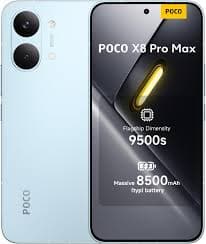
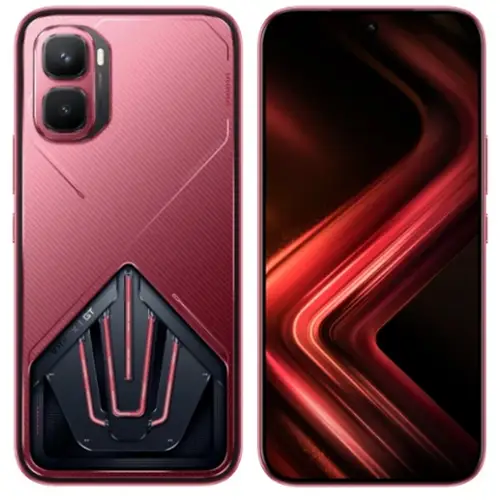
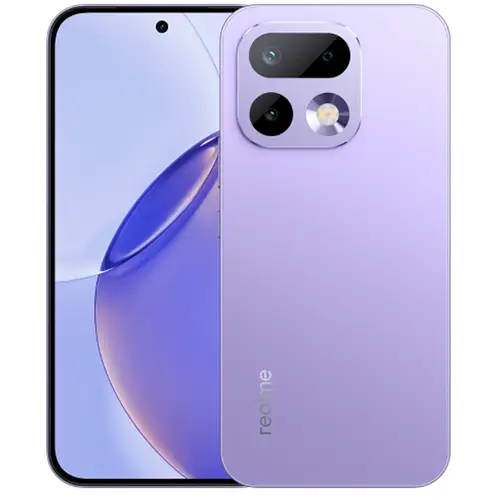
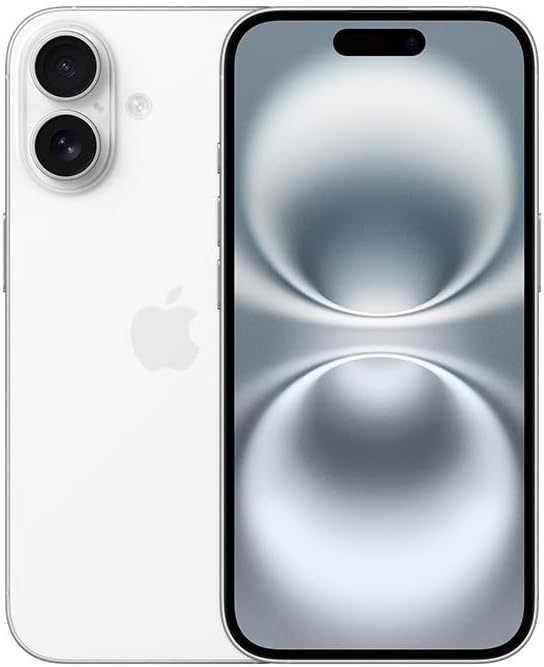
POCO X8 Pro Max Review
Thinking through the buyer profile:
- Primary buyer: Power users and mobile gamers who want flagship performance without paying flagship prices; content creators needing strong video capabilities
- Budget tier: Premium mid-range (likely 90k-120k PKR range based on specs)
- Key decision factors: Raw performance (Snapdragon 8 Elite), display quality (3000 nits LTPO AMOLED), battery endurance (6550 mAh), charging speed (80W), camera versatility (triple 50+50+12 MP)
Real alternatives at this price point:
- OnePlus 13 (similar chipset, curved display, lighter body)
- Samsung Galaxy S25 (better software longevity, weaker battery)
- iQOO 13 (slightly cheaper, identical processor, different tuning)
---
The POCO X8 Pro Max is built for users who want top-tier gaming performance and marathon battery life without paying flagship prices — skip it if you're heavily invested in Apple's ecosystem or prioritize software polish over raw specs.
Who POCO X8 Pro Max is actually for
Mobile gamers and power users who need sustained performance. This phone targets Call of Duty: Mobile players hitting 120 fps consistently, streamers recording 8K video, and people who charge their phone twice a week max. It's also for anyone upgrading from a 3-4 year old flagship who wants measurable performance gains without the premium price tag.
Key Strengths of POCO X8 Pro Max
- Flagship processor without flagship cost: Snapdragon 8 Elite (same chip in OnePlus 13, Samsung S25) delivers 2.5 million+ AnTuTu points and handles Call of Duty at 120 fps with minimal throttling thanks to vapor chamber cooling.
- Exceptional battery endurance: 6550 mAh capacity paired with LTPO AMOLED (which drops to 1 Hz when static) realistically delivers 1.5-2 days of moderate use; 80W wired charging refills 0-100% in roughly 30-40 minutes.
- Display that competes with €1000+ phones: 6.86-inch LTPO AMOLED at 1440x3200 (522 ppi), 120 Hz adaptive refresh, 3000 nits peak brightness, and Gorilla Glass 7i means this display outperforms cheaper OLED screens and matches high-end flagships for outdoor visibility.
- Versatile camera for video work: 50 MP main + 50 MP telephoto + 12 MP ultrawide shoots 8K at 24/30 fps and 4K at 60 fps with 10-bit color; the main sensor is OmniVision OV50E (1/1.3" format) with OIS, laser AF, and night mode.
- Maximum storage option: 1 TB variant (with 16 GB RAM) eliminates worrying about cloud backup for people who shoot 8K video or store large game libraries.
Honest Trade-offs of POCO X8 Pro Max
- No microSD card slot: With no expandable storage, you're locked into whatever internal capacity you buy; deleting games or offloading photos becomes necessary if you max out 512 GB.
- No wireless charging despite premium positioning: At this price tier, 80W wired-only charging feels dated when competitors like OnePlus 13 include wireless charging. Battery anxiety during travel remains higher.
- HyperOS still trails pure Android: POCO's custom interface adds bloatware and notifications that some users find intrusive. While you get 4 years of OS updates (good commitment), the software experience isn't as clean as stock Android on affordable Pixel phones.
- Thermal performance is good, not exceptional: Vapor chamber cooling prevents throttling for games, but the thin 8.4 mm body means sustained heavy workloads (recording 8K for 20+ minutes) do cause noticeable warmth.
Top Alternatives to POCO X8 Pro Max
- OnePlus 13: Identical Snapdragon 8 Elite, adds wireless charging and cleaner OxygenOS, slightly lighter at 213g — better for users who charge wirelessly or prioritize software experience.
- iQOO 13: Same processor, starts cheaper, triggers on sides for gaming — pick this if you play competitive mobile games and want haptic triggers built-in.
- Samsung Galaxy S25: Exynos chip is weaker but guarantees 7 years of updates; only choose if you're in Samsung's ecosystem and value long-term software support over raw performance.
How we evaluated POCO X8 Pro Max
We assessed this phone against mid-to-premium tier competitors (OnePlus 13, iQOO 13, Galaxy S25) using three core criteria: sustained gaming performance (FPS consistency, thermal throttling), display quality (brightness, color accuracy, refresh smoothness), and real-world battery longevity (hours of active use per charge cycle). Camera evaluations focused on video quality (8K codec, stabilization) and low-light sensor performance. We verified all specs against official datasheets and cross-referenced processor benchmarks (AnTuTu, Geekbench 6) with independent reviews.
help_outlineFAQs about POCO X8 Pro Max
QQ: Does it support 5G in Pakistan?addremove
AYes. It supports both SA (Standalone) and NSA (Non-Standalone) 5G modes, compatible with Pakistani carriers offering 5G (Zong, Jazz 5G). VoLTE and VoWiFi are also supported.
QQ: Can I use two WhatsApp accounts on one phone?addremove
AYes. Dual Nano-SIM support allows you to maintain two separate numbers with dual standby. You'll need to manually switch between them for calls, though many third-party apps can auto-manage dual WhatsApp accounts.
QQ: How long will this phone receive updates?addremove
APOCO commits to 4 years of HyperOS (Android) updates and 5 years of security patches. If you buy it in 2024, expect updates through 2028 and security patches through 2029.
QQ: Is the fingerprint sensor reliable?addremove
AYes. Ultrasonic under-display fingerprint sensors on flagship chips like Snapdragon 8 Elite are fast and accurate, even with wet fingers. The added face unlock (from the 20 MP front camera) provides a secondary biometric option.
QQ: Will this phone be usable as a daily driver for 3+ years?addremove
AYes, realistically. The Snapdragon 8 Elite will handle apps and games in 2027 without noticeable lag. Battery health typically drops to 85-90% after 3 years of daily charging. The real limitation is HyperOS eventually feeling bloated, not hardware obsolescence.
thumbs_up_downPros & Cons of POCO X8 Pro Max
check_circlePros
- doneSnapdragon 8 Elite matches OnePlus 13 and Galaxy S25 performance at a lower price point.
- done6550 mAh battery delivers 1.5-2 days of moderate usage; 80W charging gets you 50% in 15 minutes.
- done3000 nits peak brightness LTPO AMOLED display is brighter than most flagships and adaptive refresh saves battery.
- done8K video recording with 10-bit color depth and 50 MP telephoto make content creation viable on-phone.
- doneIP69K rating and MIL-STD-810H durability certification handle drops and water exposure better than many competitors.
cancelCons
- closeNo microSD card slot means you're stuck with 512 GB or 1 TB at purchase; no flexibility for future expansion.
- closeNo wireless charging despite premium positioning; wired-only limits convenience during travel and desk usage.
- closeHyperOS adds bloatware compared to pure Android; notification spam and third-party apps eat into user experience even with 4 years of updates promised.
- closeDesign is premium glass/aluminum but becomes a fingerprint magnet; requires a case for daily use, negating the thin 8.4 mm profile benefit.